Industry 03
AI Infrastructure & Networking
Infrastructure teams are asked to commit to a platform, a link and a production order before anyone has measured how the interface behaves under real traffic. SION builds the validation hardware and runs the bench work that closes that gap.
- Typical programs
- Interface validation, NIC and switch-port evaluation, optical module characterisation, FPGA-based validation hardware
- What decides success
- Evidence about a specific link under a specific workload, before the production commitment is made
The problem brought to us
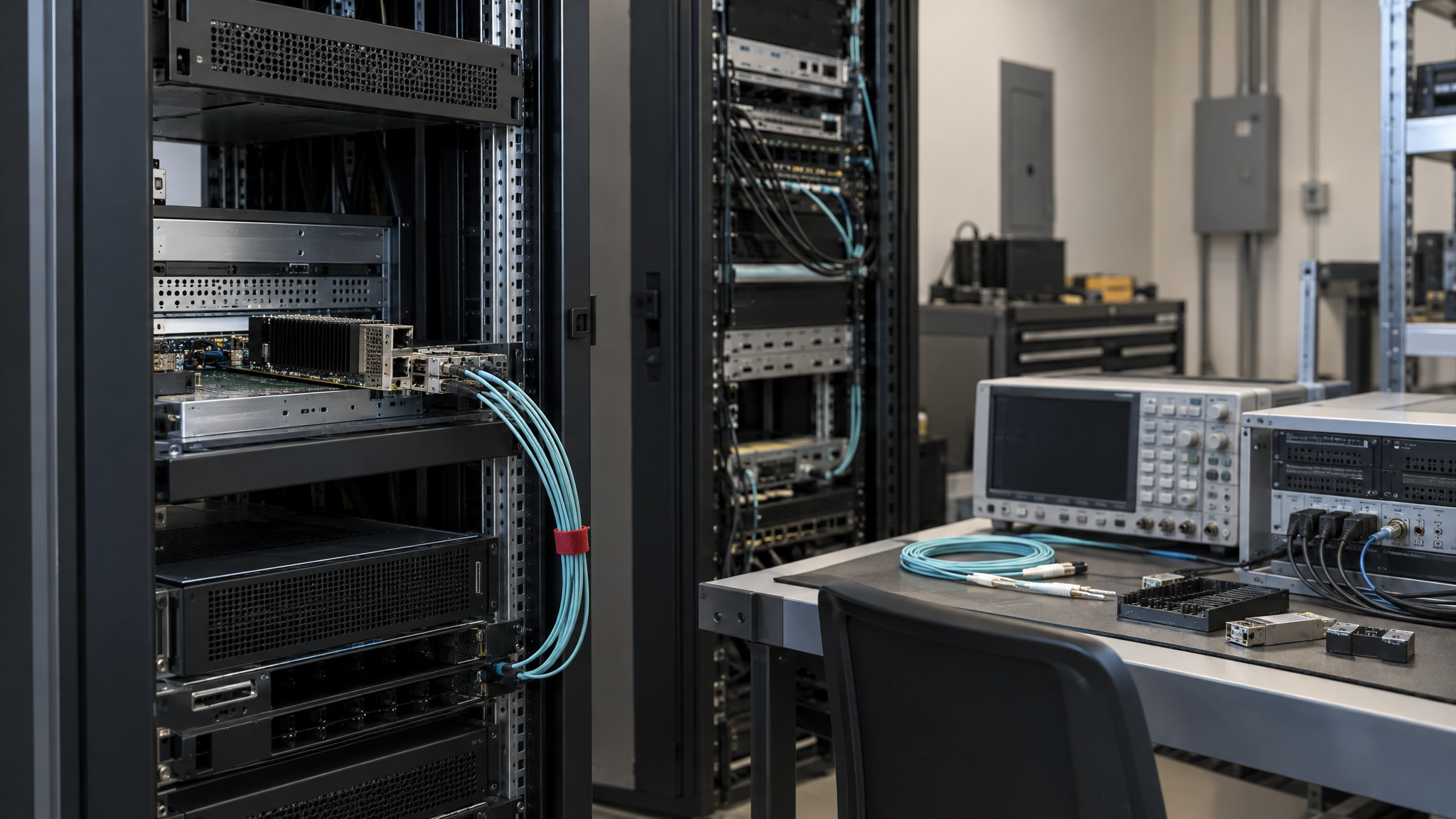
The link works in the lab and behaves differently in the rack
High-speed interfaces are usually qualified with a small number of test patterns generated by a small number of instruments. The rack presents something else: mixed traffic profiles, real thermal load, hundreds of links, and error behaviour that only emerges at scale and over time.
The evaluation question is therefore not "does the link come up" but "what does it do when it is loaded the way our workload loads it, and how would we know if it started to degrade". Answering that needs traffic generation with realistic framing, a way to monitor errors continuously, and optical connectivity characterised well enough that a link failure can be attributed to the right layer.
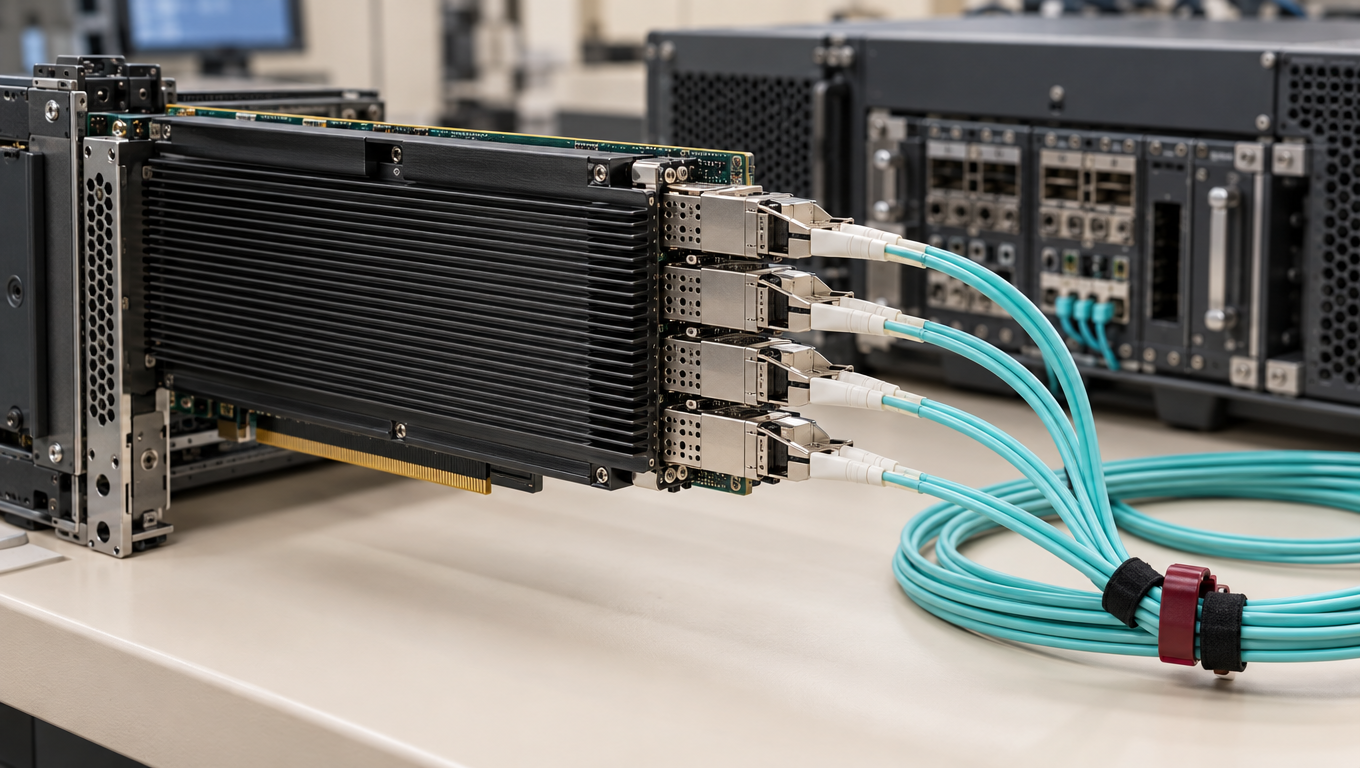
SION approaches this as a hardware validation problem. The 100GbE Traffic Generator exists because a general-purpose server cannot present the traffic profile that a switch port will actually see. Where a prototype interface needs evaluation, that work is scoped as a short program rather than a product purchase.
What we do in this environment
Five areas, all aimed at producing evidence
01High-speed Ethernet
Interface bring-up, link training diagnosis, error-rate monitoring and the protocol conformance work that establishes a link is behaving to specification rather than merely passing traffic.
02FPGA validation
Implementing validation logic on FPGA so that traffic generation, monitoring and capture happen in hardware, at line rate, without disturbing the system under test.
03Traffic generation
Realistic traffic profiles — frame sizes, burst behaviour, address distributions — presented to a NIC, module or switch port, with the counters and error statistics needed to interpret the result.
04Optical connectivity
Transceiver and fiber characterisation, connector hygiene and inspection, and the diagnostic discipline that lets an optical link problem be separated from a protocol problem.
05System integration
Integrating validation hardware into an existing test environment, with control interfaces and result reporting that fit how the customer's lab already works.
06Prototype evaluation
Short evaluation programs where a customer needs a specific interface measured before committing production hardware — scoped around the question, not around a product catalogue.
Evaluation path
How an evaluation before production commitment usually runs
Most teams do not want a research project. They want a defined answer to a defined question in a defined time, with the measurements recorded in a form they can take to a design review.
- 01
Define the question
Which interface, under which workload, and what result would change the decision.
- 02
Bench setup
Hardware, optics and instrumentation assembled and characterised before the device under test is connected.
- 03
Baseline
Known-good reference measurement, so that later results have something to be compared against.
- 04
Loaded evaluation
Realistic traffic, thermal load and duration, with continuous error and counter monitoring.
- 05
Isolate and repeat
Any anomaly narrowed to a layer — optical, physical, protocol or software — and reproduced deliberately.
- 06
Report
Measurements, conditions and conclusions, in a form suitable for a design or sourcing review.
Relevant products
Validation hardware
These are engineering products: they exist to generate traffic and emulate interfaces, not to serve a production workload.
Related capabilities
The capabilities this industry uses most
Design and build
Assurance and sustainment
Start a conversation
Describe the interface, the workload it will see and the decision waiting on the result. That is enough to scope an evaluation.
Discuss an evaluationProgram inquiry
Bring us your requirements.
If a link, a module or a prototype interface needs measurement before you commit to it, tell us the workload and the decision it unlocks.