Capability 05
Manufacturing & Lifecycle
A design that cannot be built repeatedly, inspected and traced is not finished engineering. SION coordinates suppliers, readiness, assembly and QA — then stays engaged for the maintenance and obsolescence work that outlasts the program's development phase.
- Scope
- Supplier coordination, procurement, prototyping, production readiness, assembly coordination, QA, traceability, maintenance, obsolescence and engineering change support
- Typical entry point
- A design nearing production, or an existing product that has become difficult to build or support
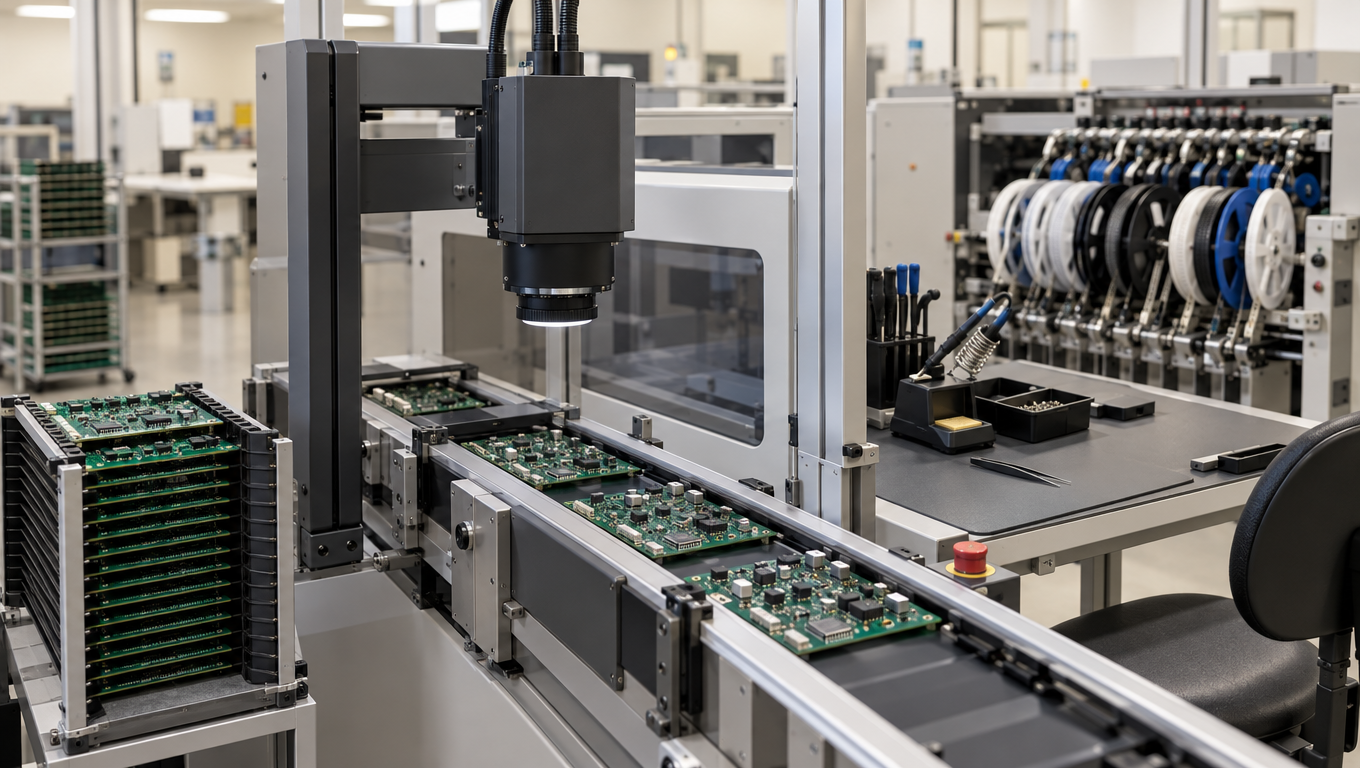
What this covers
The lifecycle question is asked at design review, not at end-of-life
Parts go obsolete on their own schedule. A program that expects to be building the same board in fifteen years will watch several generations of the component supply move underneath it. The difference between an inconvenience and a crisis is whether the design was structured to absorb change: whether alternates were characterised, whether the footprint tolerates a second source, whether firmware treats a substituted part as a normal event.
SION treats manufacturability and lifecycle as design inputs. Production readiness review happens before the design is frozen, so that assembly constraints, inspection access, test coverage and part availability are all resolved while changes are still cheap.
After delivery, the same engineering record supports maintenance and change: as-built configuration, traceability from serial number to build, test records retained, and an engineering change process that lets a substitution be evaluated against its effect on qualification rather than guessed at.
01Supplier coordination
Supplier qualification, lead-time tracking, second-source development, and honest reporting on where the supply risk actually sits in the BOM.
02Procurement and prototyping
Prototype and pilot build purchasing, kitting, shortage management and incoming inspection, calibrated to the quantity the program actually needs.
03Production readiness
DFM and DFA review, assembly drawings, stencil and panel decisions, fixture and test coverage definition, and a documented readiness gate before volume build.
04Assembly and manufacturing coordination
Working with assembly partners on build sequencing, programming, conformal coat and mechanical integration, with the engineering team available when a build question needs a decision.
05Quality assurance and traceability
Inspection criteria, first-article approval, serialisation, build records and test-result retention — so a unit in the field can be traced back to its build and its evidence.
06Maintenance, obsolescence and change
Spares strategy, repair procedures, end-of-life notices, last-time-buy analysis, alternate part qualification and engineering change support through re-qualification.
Program mechanics
Customer inputs, engineering deliverables and acceptance criteria
Manufacturing scope depends heavily on whether SION is coordinating a build, supporting a customer's own production line, or sustaining hardware already in service. The baseline below is adjusted per program.
Customer inputs
- Released design package — schematic, layout, BOM, assembly drawings, firmware images
- Build quantities, forecast profile and the customer's preferred manufacturing model
- Quality clauses, inspection requirements and any contractual flow-downs
- Serialisation and configuration-management requirements
- Service life expectation and the minimum support period the platform requires
- Existing field population, failure history and spares position, where sustaining work is involved
Engineering deliverables
- Production readiness review
- DFM/DFA findings, open actions and a clear go / no-go recommendation.
- Controlled manufacturing package
- The build document set at a named revision, with any deviation recorded.
- Supplier and lead-time register
- Part risk, availability status and mitigation for every constrained line.
- Inspection and acceptance plan
- What is inspected, how, at what sample rate, and the criterion for acceptance.
- Traceability record
- Serial-to-build mapping with test results and firmware revision.
- Obsolescence and change plan
- Review cadence, last-time-buy triggers and the engineering change route.
Typical acceptance criteria
- First-article inspection passed and approved before volume build proceeds
- Every unit serialised and traceable to its build record and test results
- Production test coverage demonstrated to detect the agreed fault classes
- No outstanding critical action from the readiness review at the start of build
- Any substitution documented, evaluated and, where needed, re-qualified before use
- Support and spares position agreed in writing for the period the platform requires
On capability claims. SION describes manufacturing coordination and support. Specific assembly partners, facility certifications, production volumes and yield figures are established per program and shared under NDA. Nothing on this page should be read as a claim of a certified or accredited production facility.
Where this connects
Related capabilities, products and industries
Adjacent capabilities
All capabilitiesProgram inquiry
Bring us your requirements.
If a part is going end-of-life, a build has become difficult, or a design is approaching production for the first time, describe the situation and we will scope the support.